
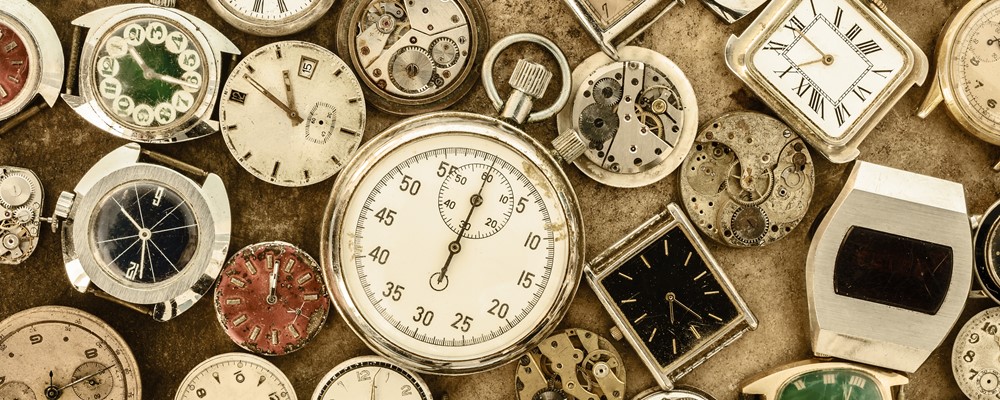
The history of watches begins in 16th-century Europe, evolving from portable spring-driven clocks of the 15th century. Early timepieces, often called pocket watches, were initially worn as pendants and later carried in pockets. The Swiss watch industry emerged in the mid-1500s, and pocket watches became a fashionable staple.
The development of the wristwatch followed, initially for women, and later gaining traction among men for practical purposes, especially during wartime.
The history of watches is a fascinating journey that spans over 500 years and reflects humanity’s drive to measure, master, and carry time. Here’s a clear, structured overview:
1. The Beginning – 16th Century
- Early Portable Timepieces: Watches first appeared in the early 1500s in Europe, evolving from spring-driven table clocks.
- Shape & Wear: They were bulky, egg-shaped, and worn on chains or carried in pockets—more jewelry than precision tools.
- Materials: Made from brass or precious metals, they often had only one hand showing the hour.
2. Pocket Watches Dominate – 17th to 19th Century
- Glass Covers & Cases: By the 1600s, glass crystals protected the dial, and cases became more decorative and functional.
- Balance Spring Innovation (1675): Christiaan Huygens’ invention dramatically improved accuracy, making watches reliable for daily use.
- Railroad Precision: In the 19th century, the need for synchronized time—especially for trains—led to highly accurate “railroad-grade” pocket watches.
- American Watchmaking: Companies like Waltham and Elgin pioneered mass production, making watches more affordable and consistent.
3. The Birth of the Wristwatch – Late 19th to Early 20th Century
- Women’s Jewelry: Wristwatches were originally considered fashionable for women, while men stuck with pocket watches.
- Military Adoption: During the Boer War and World War I, soldiers preferred wristwatches for practicality—this cemented their popularity for men.
- Innovation: Companies like Cartier and Girard-Perregaux made early wristwatches for aviators and officers.
4. The Rise of the Modern Watch – 20th Century
- Automatic Movements (1920s-30s): Self-winding mechanisms eliminated the need for daily winding.
- Dive & Tool Watches: The 1950s saw the birth of iconic tool watches—Rolex Submariner, Omega Seamaster, etc.—made for divers, pilots, and explorers.
- Luxury & Branding: Swiss makers like Patek Philippe and Audemars Piguet elevated watches into status symbols and collectibles.
5. The Quartz Revolution – 1970s-80s
- Seiko’s Breakthrough (1969): The Seiko Astron was the first quartz wristwatch—more accurate, cheaper to produce, and disruptive to the Swiss industry.
- “Quartz Crisis”: Many traditional watchmakers went bankrupt or had to adapt as quartz watches dominated the market.
- Digital Watches: LED and LCD watches became popular, especially Casio’s calculator and G-Shock models.
6. Mechanical Renaissance – 1990s to Today
Smartwatches: In the 2010s, the Apple Watch and others introduced a new era—wearable technology blending tradition with connectivity.
Other sources –
Luxury Revival: Collectors rediscovered mechanical watches for their craftsmanship, artistry, and heritage.
Complications & Haute Horlogerie: Brands pushed technical boundaries with tourbillons, perpetual calendars, and minute repeaters.
Early Origins (15th-16th Centuries): [1, 2]
- Portable Clocks: The history of watches begins with the development of portable spring-driven clocks in the 15th century. [1, 2, 3]
- Early Watches: In the 16th century, the first watches, often oval-shaped and called “Nuremberg eggs,” emerged, primarily in German cities like Nuremberg and Augsburg. [2, 5]
- Peter Henlein of Nuremberg: He is often credited with the invention of the watch, although others were also creating miniature timepieces during this period. [2, 5]
- Neck Pendants: These early timepieces were often worn around the neck as pendants. [4, 10]
Pocket Watch Era (17th-18th Centuries): [4, 7]
- Pocket Watches: The emergence of pocket watches in the 17th century marked a significant shift in timekeeping. [4, 7]
- Fashionable Items: Pocket watches became fashionable and status symbols, particularly for men. [4, 7]
- Swiss Watch Industry: The Swiss watch industry played a crucial role in the development of pocket watches, with innovations in materials and design. [6]
Wristwatch Evolution (19th-20th Centuries): [3, 8]
- Early Wristwatches: The first wristwatches were designed for women, often adorned with jewelry. [3, 8]
- Practicality and Wartime Demand: Wristwatches gained popularity for practical reasons, especially during wartime when men needed to check the time without reaching into their pockets. [3, 9]
- Mass Production: The mass production of watches, including wristwatches, began in the 1840s in the United States. [3, 11]
Modern Era: [1]
- Continued Innovation: The watch industry continues to innovate, developing complex mechanisms, materials, and designs. [1]
- Wristwatches as Style Icons: Wristwatches have evolved into a fashion statement and a symbol of status. [7]
- Smartwatches: The advent of smartwatches has further diversified the landscape of timekeeping and timekeeping devices. [1]
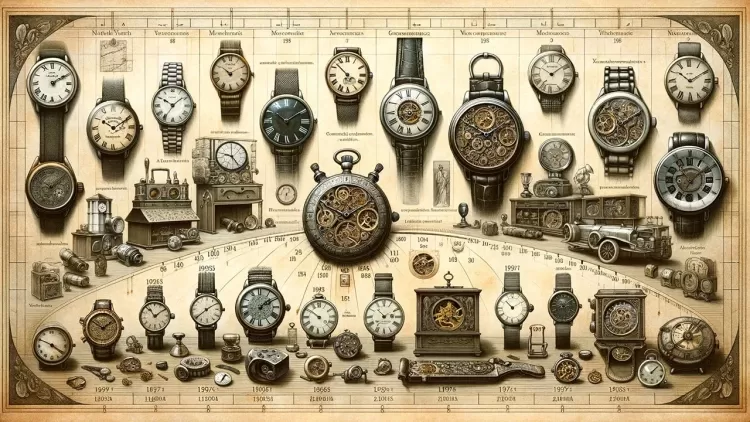
Watch Knowledge Sources
[1] https://en.wikipedia.org/wiki/History_of_watches
[2] https://en.wikipedia.org/wiki/Watch
[3] https://www.bremont.com/blogs/blogbook/mens-watches-history
[4] https://www.hwljewelers.com/journals/the-history-of-watches
[5] https://rubberb.com/blog/15-milestones-in-history-of-the-watchmaking/
[6] https://www.the1916company.com/blog/invention-of-the-wristwatch.html
[7] https://www.watchswiss.com/perpetual/history-of-time/
[8] https://www.swisswatchexpo.com/thewatchclub/2023/02/07/the-invention-of-the-wristwatch/
[9] https://www.shinola.com/our-stories/history-of-the-modern-wrist-watch/
[10] https://www.britannica.com/technology/watch
[11] https://vero-watch.com/blogs/recent_posts/history-of-watches
Find Your Historical Timepiece
Mechanical,Quartz,Digitial and Smart Watches
